Your Ukrainian interpreter at the Dutch notary
You are buying or selling a home in the Netherlands, and the notary's office has told you that an interpreter will be present when the deed is signed. I am Volodymyr Katchour, a sworn Ukrainian interpreter since 2009 and in this profession since 1994. On this page I explain what happens that day, what I do, and why the interpreter speaks Ukrainian.
Ask for my availability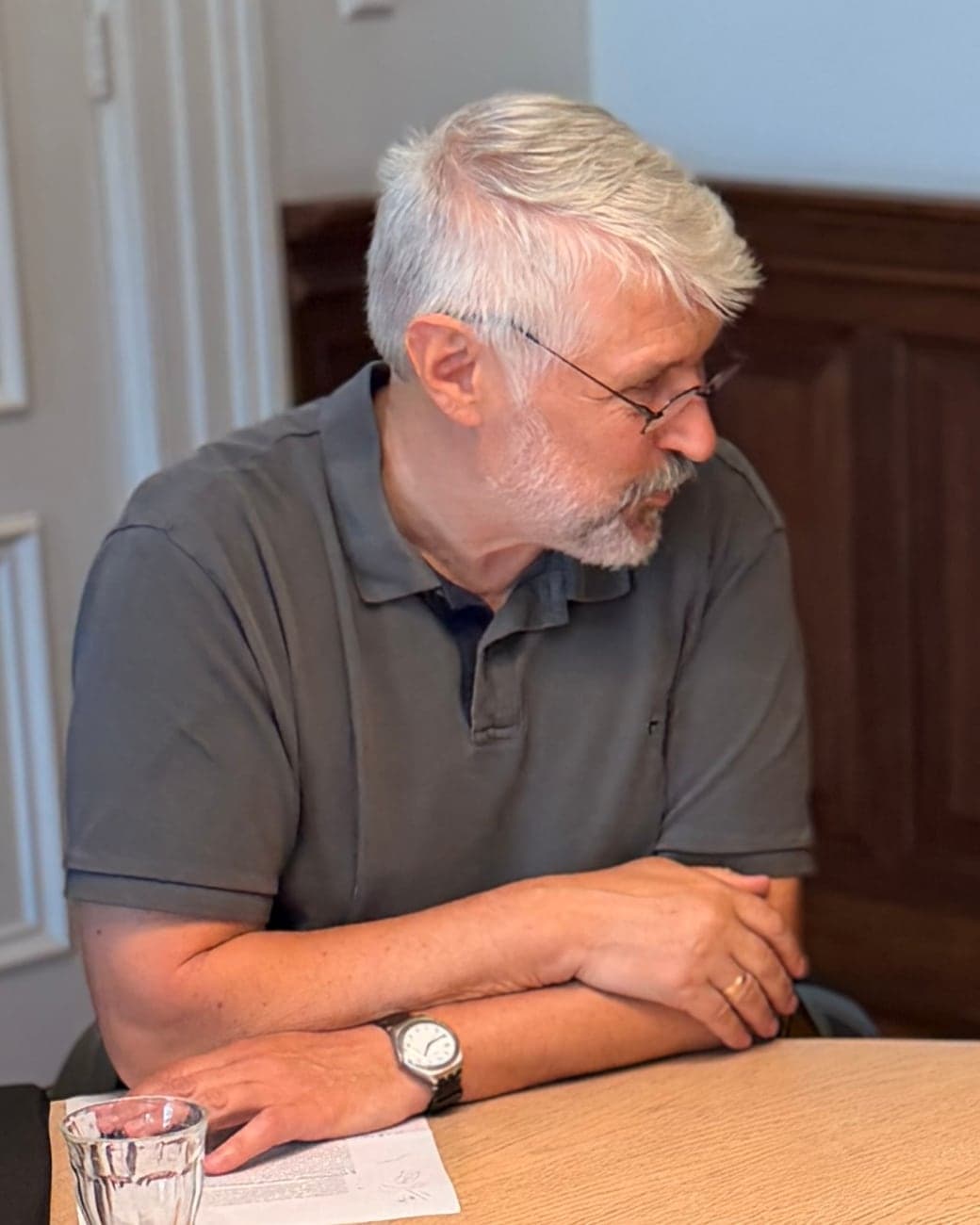
What happens at the signing
In Dutch, the signing is called het passeren. You sit at a table with the notary and me, and often with the other party as well. The notary first checks the identity of everyone present, including mine. Then the notary reads the deed of transfer aloud and explains it, and if there is a mortgage, the mortgage deed too. I translate everything into Ukrainian as it is said.
When you have a question, you ask it in Ukrainian, I put it to the notary in Dutch, and you hear the answer in Ukrainian. You only sign when everything is clear to you. I sign the deed as well, and my name is stated in it, so it is on record who interpreted for you.
Why Ukrainian, even if your English is good
Many of the buyers I work for speak excellent English. Even so, a legal text is easiest to follow in the language you grew up with, and legal terms rarely translate word for word. Dutch law says that if a party does not sufficiently understand the language of the deed, an interpreter attends, if possible a sworn one. The Royal Dutch Association of Civil-law Notaries (KNB) adds that this should in principle be an interpreter in your native language.
That is also why your partner or a relative cannot simply interpret for you. They would have to be a sworn interpreter themselves, with no interest in the purchase, and when you buy a home together that is rarely the case.
What I do, and what I do not do
I translate everything that is said, completely, including the tone. I do not leave things out and I do not add my own explanation. I also do not give legal advice: the notary explains the deed, and if something is unclear, you ask and I translate your question. What is said at the table stays there. I have signed a confidentiality declaration, and various Dutch government agencies screen me every five years.
What happens next
Usually the notary's office arranges the interpreter. If you would like to suggest me, or want to know whether I am available, send the date, the place and the type of deed. The page for the notary's office is in Dutch, so you can forward it to them. There is also a Ukrainian version of this page.
Signing soon?
Tell me the date, the place and the type of deed, and I will let you know whether I can be there.